

Introduction
Every culture on earth marks the arrival of a new child. The impulse is universal: this moment is too significant to pass in silence. A child has been born. The community must respond.
Yet how that response takes shape varies enormously. Some communities wait — holding their breath for one month before celebrating, because survival itself could not be assumed. Others act immediately, whispering a name into the child’s ear within minutes of birth. Some bury the child’s first connection to the world — the placenta — in ancestral soil. Others gather the whole neighborhood to taste honey and bitter kola nut together, and speak a name that will shape a destiny.
What unites every tradition on this page is the same conviction: a child does not belong only to its parents. It belongs to a community, to a story, to a land, and — as Christians understand it — to God.
This page explores six culturally rich birth and welcoming traditions from around the world. For each, we ask: what does this tradition carry that the whole Church can receive? And where discernment is needed, we name that honestly and gently.
“Children are a heritage from the Lord, offspring a reward from him.” — Psalm 127:3
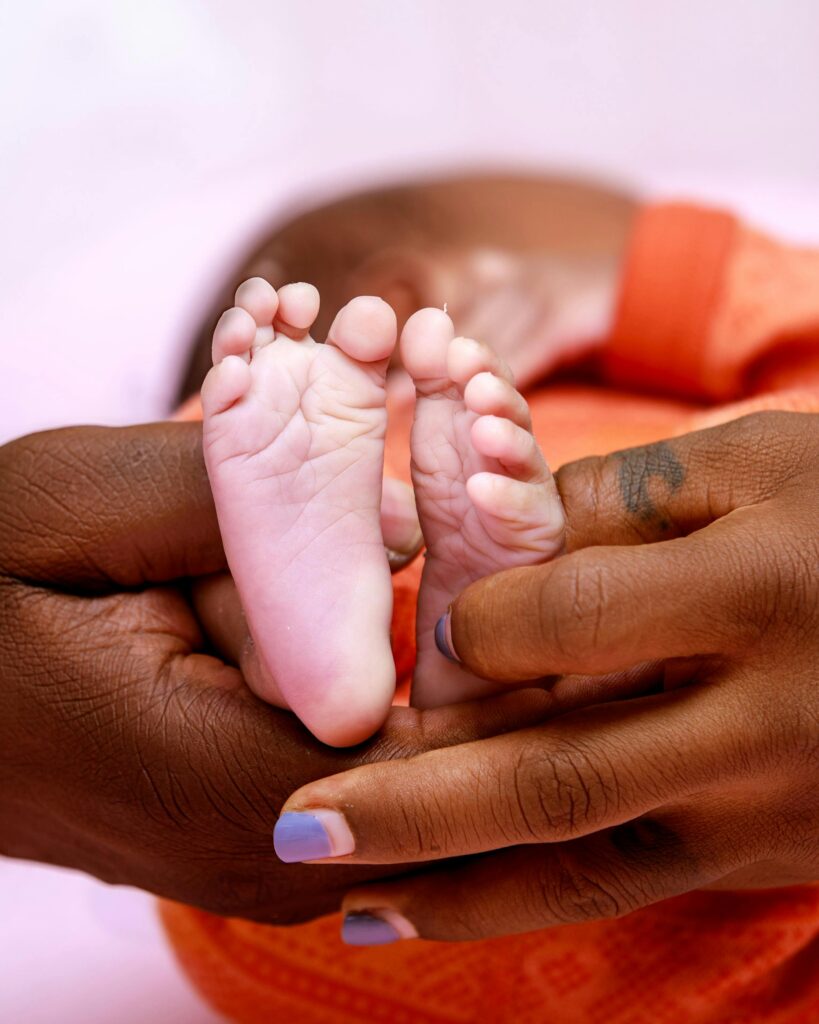
In Yoruba culture, when a child is born it is more than just the arrival of new life — it is something everyone far and near celebrates. One of the most important parts of this celebration is the naming ceremony, called Ìkosèwàjù Ọmọ, which means “the child’s stepping forward.” Southworld
The ceremony is held on the eighth day after birth, taking place in the family compound. The oldest family member assumes the role of officiant and uses natural elements — honey, sugar, kola nut, alligator pepper, water, palm oil, sugarcane, salt, and bitter liquor — to bless the newborn. Each element carries meaning: honey for a sweet life, palm oil for ease, kola nut for long life, salt and pepper to keep things lively. A spiritual leader offers blessings, and guests partake by offering prayers and dropping money into a bowl. SFCatholic
Yoruba children typically receive at least three to five names, each with unique meaning. Some names describe the circumstances of birth. Others are passed down through generations. The ceremony is followed by music, dancing, and feasting — a joyful welcome for the newborn into the community. Combonimissionaries
For Christian Yoruba families, the ceremony is typically led by a pastor or Christian elder rather than a traditional priest, and the spiritual blessings are directed to God rather than ancestral spirits. This is a beautiful example of inculturation — the Christian faith taking root in a cultural form and flourishing within it.
The gift for our worship: The naming as a community act. A child’s name is spoken publicly, with meaning, in the presence of witnesses who commit themselves to that child’s flourishing. Our churches can incorporate intentional naming moments into baby blessings — asking: what does this name mean? What do we, as community, pledge to this child?
Key Scripture: Isaiah 43:1 “I have called you by name; you are mine.”
The Aqiqah ceremony is an Islamic tradition performed to celebrate the birth of a child, typically on the seventh day after birth. It involves the sacrifice of an animal — a goat or sheep — as an act of gratitude to God for the blessing of a newborn. The meat is divided and shared among family, friends, and those in need. Culturalawareness
The Aqiqah is also the moment the child’s hair is first shaved, and its weight in silver — or the monetary equivalent — is donated to charity. This act symbolizes detachment from materialism and the commitment to a life of faith and generosity. The child’s name is formally announced at this gathering. FSSP UK
Alongside the Aqiqah, one of the most tender Islamic birth customs is the Adhan — the call to prayer — whispered into the newborn’s right ear by the father or grandfather immediately after birth. In Islamic culture, the first words a child hears are the call to worship, so that God’s name is the very first sound to enter the world for that child. Polish Presidency of the Council of the European Union
As Christians, we receive the Aqiqah with appreciation for its impulse — gratitude, generosity, and community — while understanding that our theology of sacrifice is fulfilled in Christ. The act of giving to the poor at the moment of a child’s birth, however, is a practice that translates directly and beautifully into Christian worship.
The gift for our worship: Gratitude made concrete. The instinct to mark a birth with an act of generosity toward those in need is deeply biblical. Our churches can invite families to make a gift to the poor or a charitable cause at the time of a child’s birth or blessing — connecting new life with God’s care for the vulnerable.
Key Scripture: Luke 2:22–24 (Mary and Joseph’s offering at the temple after Jesus’ birth) — James 1:17 “Every good and perfect gift is from above.”
The Jatakarma ceremony welcomes the baby into the world immediately after birth. The father places a small amount of ghee and honey on the baby’s tongue and whispers the name of God in the child’s ear. On about the eleventh day after birth, the parents celebrate the Namkaran — the naming ceremony — by dressing the baby in new clothes. The family astrologer announces the child’s horoscope, and the child’s name is chosen according to traditional and astrological rules, followed by a feast with family and friends. Sendvalu
During the Namkaran ceremony, the priest performs rituals with prayers to the Gods, the elements, and the spirits of the ancestors. Rice grains are spread on a bronze dish and the father writes the chosen name on it using a gold stick while chanting God’s name. Then he whispers the name into the child’s right ear, repeating it four times along with a prayer. All others present formally accept the name. Austin Community College District
Here, discernment is helpful. The Jatakarma and Namkaran are embedded within a Hindu worldview that includes the veneration of multiple deities and appeals to ancestral spirits. For Hindu-background Christians, the question is how to honor the beautiful human instincts within these ceremonies — the tenderness of the father’s first touch, the importance of naming, the gathering of community — while directing them to the one God.
What endures beautifully in a Christian reframing: the first taste of honey as a sign of God’s goodness; the father whispering God’s name into the child’s ear; the community formally receiving and blessing the child’s name.
The gift for our worship: The first taste. The idea that a child’s very first experience of the world should be sweetness — a physical parable of God’s goodness — is a powerful liturgical image. Our churches can incorporate a moment of anointing with oil, or a drop of honey, in baby blessing ceremonies as a tangible symbol of God’s sweetness poured over a new life.
Key Scripture: Psalm 34:8 “Taste and see that the Lord is good.”— Ezekiel 3:3 “It tasted as sweet as honey in my mouth.”
The Red Egg and Ginger Party is the traditional Chinese celebration of a baby’s one-month birthday. The custom dates to ancient times when infant mortality rates were high and new babies were named and celebrated only after a month had passed and survival seemed assured. Today, the tradition persists as a way for proud parents to introduce their new baby to family and friends. OrthodoxWiki
The party’s name comes from its two central symbols: red-dyed eggs symbolizing fertility and the renewal of life, and pickled ginger which supports the new mother’s postpartum recovery. Red represents joy, prosperity, and good fortune. At the party, the baby’s Chinese name is announced to family and friends for the first time. Kultura Filipino
According to ancient folklore, the tradition began as an offering to the gods — an appeal from parents to bless and protect their children. “Eggs have always been auspicious to the Chinese,” notes one writer on Chinese culture. “There is the popular creational myth of Pangu, in which the world began as a primal mass shaped like an egg.” Inquirer.net
As Christians, we receive this tradition’s deep wisdom: that survival itself is worth celebrating, that community gathers around a child’s name, and that the recovery of the mother is honored alongside the arrival of the child. The folk-religious origins of the red egg are worth noting, but the tradition as practiced today is largely cultural rather than religious, and can be received freely.
The gift for our worship: Honoring the mother. The Red Egg party explicitly celebrates the new mother’s reentry into the community after a month of recovery. Our churches can take this seriously: making the postpartum period a time of intentional community care, and celebrating — not just the child — but the mother’s courage, body, and journey.
Key Scripture: Psalm 139:13–14 “You knit me together in my mother’s womb… I am fearfully and wonderfully made.”
In the Māori language, the word whenua means both placenta and land. All life is seen as being born from the womb of Papatūānuku — the earth mother. After birth, it is traditional to bury the whenua (placenta) in a significant place, most often the family’s ancestral land. This practice reinforces the relationship between the newborn child and the land of their birth. Greek Orthodox Archdiocese of America
During the colonial period in New Zealand, this practice was taken from Māori — placentas were treated as medical waste and the burial of whenua was dismissed as primitive. The tradition found its resurgence in 1984, championed by a group of Māori scholars and artists who returned to the practice of creating ipu whenua — clay vessels for the placenta — and encouraging families to reclaim this act of belonging. Wikipedia
Underlying the practice is the proverb: “He taonga nō te whenua, me hoki anō ki te whenua” — what is given by the land should return to the land. The placenta vessel connects the child to their ancestral place, affirming identity, genealogy, and birthright. Stgeorgegoc
The Māori worldview includes beliefs about the earth mother Papatūānuku as a spiritual being that are distinct from Christian theology. As Christians, we do not share the belief that the land itself is a divine mother. However, the impulse within this practice — that a child belongs somewhere, is rooted in a place and a story, and that birth connects us to the generations before us — resonates powerfully with the Christian understanding of covenant, family, and creation.
The gift for our worship: Rootedness and belonging. The idea that a child is not a floating individual but a person connected to a place, a community, and a lineage. Our churches can celebrate this by praying specifically for a child’s roots — naming the family, the community, the congregation as the soil into which this child is planted.
Key Scripture: Jeremiah 1:5 “Before I formed you in the womb I knew you.” — Ephesians 2:19 “You are no longer foreigners and strangers, but fellow citizens with God’s people and also members of his household.”
Some suitable songs
- Olorun to da awon Oh God, who created
Original language: Yoruba
God as creator, perfect to welcome a child - Baba Ese O Baba Father, we thank You, Father
Original language: Yoruba
Greatfulness to the Father for the baby - Como Flores Like Flowers Original language: Italian
The image of flowers standing for the vunerable image of birth - Nara Ekele Mo Receive My Thanks
Original language: Igbo
Thankfulness to God for the birth of new child - Multilingual Grace Shukran, Kamsahae, Gracias, Asante
Original language: Multiple
Thankfulness in many languages
A note on discernment: Birth rituals sit close to the heart of every family. This page approaches each tradition with deep respect. Where practices involve spiritual elements that are not compatible with Christian faith — such as seeking blessing from ancestral spirits or assigning spiritual power to ritual objects — we note this gently. But we approach even those traditions with curiosity first, asking: what is the human truth this tradition is reaching for?