

Introduction
Death is the one threshold every human being crosses. Yet how communities grieve, remember, and celebrate those who have gone before them varies enormously across the world. These differences are not obstacles to worship — they are windows into the many ways God’s image is reflected in humanity.
This page explores cultural expressions around death and remembrance from across the globe. Each tradition carries gifts: a posture, a rhythm, a symbol, or a practice that can enrich how we, as the body of Christ, accompany one another through loss.
“Precious in the sight of the Lord is the death of his faithful servants.” — Psalm 116:15
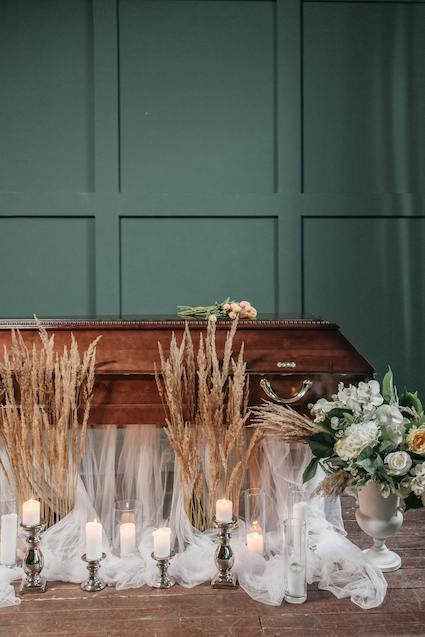
Ghana & West Africa — Celebration of Life
Across Ghana’s diverse ethnic and religious landscape, one shared belief unites most communities: the dead are never truly gone, ancestors continue to protect and guide the living, and funerals ensure the deceased is properly welcomed into the ancestral realm. Though modern Ghana is approximately 72% Christian, traditional spirituality shapes almost every funeral, regardless of faith. Coeurdexocolat
This belief in the active power of ancestors over the living is where Christian discernment is needed. The challenge for Christianity in Africa is how to accommodate funeral rites within the faith without jeopardizing its essence — the invitation is to do away with elements that are incompatible with Christian teaching, while encouraging those that serve to preserve African culture and place high value on human life. Scielo
What can be received with both hands? The African tradition of homegoing — the symbolic return of the spirit to its heavenly home — blends naturally with Christian faith. The community mobilizes entirely: cooking, logistics, presence, sustained over many days. The elaborate and festive ritual honors Black life, love, and community. Evermore
Ghanaian funerals share key characteristics across all traditions: community focus, elaborate scale, deep respect for elders, integration of faith, and continuity through anniversaries — especially the one-year memorial, which sustains remembrance. Remembers Group
The gift for our worship: Joyful, communal, unapologetic celebration of a life well lived.
The conviction that a person’s death deserves to be marked with scale — music, food, stories, the whole community. Our churches can reclaim the “homegoing” as a deeply Christian act of resurrection faith.
Key Scripture: Psalm 116:15 (“Precious in the sight of the Lord is the death of his faithful servants”) — 1 Corinthians 15:55 (“Where, O death, is your sting?”)
Mexico & Latin America — Día de los Muertos (Day of the Dead)
Día de los Muertos is a Mexican holiday held from October 31 to November 2, connected to the Catholic observances of All Saints’ Day and All Souls’ Day, as well as indigenous Aztec customs. Families gather to honor deceased loved ones by placing food, flowers, and candles on home altars or at graves, marking a path from the grave to the home to guide the dead back. GotQuestions
The core idea behind the holiday is that the dead participate in the ceremonies — that they return to be with their families during these days. As Christians, we do not hold this belief. Scripture is clear that when a person dies, their eternal destiny is already fixed, and believers have direct access to God through Jesus Christ — no mediation through the dead is needed or possible. GotQuestionsCompelling Truth
For evangelical Christians in Mexico, where the celebration is taken most seriously, participating in Día de los Muertos can carry real spiritual and social weight — some face significant pressure, and refusal can even mean social ostracism in certain communities. This is a tradition that calls for genuine pastoral sensitivity, not dismissal. The Gospel Coalition
However, there is a more nuanced view held by some: All Saints’ Day — one of the traditions Día de los Muertos stems from — is a vehicle for the biblical message that the body of Christ is both earthly and heavenly, providing reassurance and a sense of support. Christianity Today
The gift for our worship: The fierce refusal to pretend loved ones are simply gone. The tenderness, the photographs, the shared meals — these impulses are not wrong. They can be redeemed. In our churches, this might look like a Wall of Remembrance with photos, naming the departed aloud in prayer, or sharing a meal in someone’s honor — directing that memory upward to God, not outward to the dead.
Key Scripture: Deuteronomy 18:10–12 (on communicating with the dead) — Hebrews 9:27 (“it is appointed for man to die once, and after that comes judgment”)
Brazil — Velório (The Wake)
The velório, or wake, is held within 24 hours of death and features prayer, hymns, storytelling, and communal overnight presence. It is followed by nine consecutive days of prayer (novenas) and a Seventh Day Mass (Missa de Sétimo Dia) that marks a communal step in mourning and remembrance. Solviah
Unlike cultures where wakes are private, in Brazil they are often open to the entire community. Family, friends, and even acquaintances gather to share memories and support one another, with the body present throughout. Memoriallocator
Theologically, the Brazilian velório sits remarkably close to Christian values. Open emotional expression — weeping, singing, heartfelt storytelling — is both natural and culturally encouraged. Children are usually included, learning that mourning is an act of love rather than something to fear. Solviah
This resonates deeply with the biblical picture: Jesus himself wept at the tomb of Lazarus (John 11:35), showing that mourning is a part of love. Paul encourages believers to grieve, but with hope in Christ’s return (1 Thessalonians 4:13). Memorial Funeral
The gift for our worship: The courage to sit with death rather than rush past it. The presence of the body. The open door — anyone can come. The telling of stories through the night. Our churches can learn to hold grief with this kind of communal, embodied tenderness.
Key Scripture: John 11:35 (“Jesus wept”) — Romans 12:15 (“Weep with those who weep”)
China & the Chinese Diaspora — Qingming Festival
The Qingming Festival is observed by Chinese communities worldwide as a time to gather at the graves of ancestors, tidy them up, and pay respects. Traditional rituals include burning incense and offering food to ancestors. YMI
From a Christian perspective, practices that assume departed ancestors still exist in the afterlife needing our offerings to survive, or that they hold power over the living, are contrary to Christian teaching and should be avoided. Methodist
Yet Scripture affirms a deep value that lies at the heart of Qingming: honoring those who came before us. Christians can participate by tidying ancestral graves, bringing flowers as a mark of respect, and telling stories about ancestors to children — not expecting anything in return, but as a pure act of gratitude and remembrance. Methodist
The gift for our worship: The discipline of intergenerational memory. Honoring those who paved the way before us as an act of thanksgiving to God — not directed at the dead, but upward to the God who created them.
Key Scripture: Exodus 20:12 (“Honor your father and your mother”) — and Exodus 20:3 (“You shall have no other gods before me”)
Japan — Obon Festival
Obon is an annual Buddhist celebration in which families honor the believed return of ancestors’ spirits to the mortal realm. Families clean gravesites, light lanterns to guide the spirits home, and leave out food offerings. East West
Christians understand that the root of the festival’s traditions is contrary to their faith: the spirits do not really visit, cannot be helped by material offerings, and should not be approached as powerful beings. Elizabethannboyles
Yet Obon is also much more than its theological assumptions. For Japanese Christians, this season is genuinely difficult — they do not want to worship anyone but the one true God, but they also want to show love and respect to their families. Many choose to be present at family gatherings, bring gifts, share tea, and simply be together — without worshipping at the family altar. OMF (U.S.)
The gift for our worship: The aesthetics of gentle grief — lanterns, stillness, communal gathering. This sensory dimension of remembrance can be carried into Christian worship: lighting candles as prayer, speaking names aloud, gathering together as an act of gratitude for lives lived.
Key Scripture: Deuteronomy 18:10–12 (on communicating with the dead) — and 1 Thessalonians 4:13–14 (hope for those who have died in Christ)
Jesa is a widely practiced Korean memorial ceremony for ancestors, traditionally held on the anniversary of a relative’s death. The majority of Catholics, Buddhists, and non-believers participate in ancestral rites, though Protestants generally do not. Wikipedia
It is worth noting that the framing matters here. Scholars argue that translating jesa as “ancestor worship” is misleading — “ancestral rites” or “ancestral ritual” are more accurate and neutral terms that do not automatically carry connotations of idolatry. Taylor & Francis Online
Korean Protestant Christians have over time developed their own form of ancestor commemoration, rooted in the contextualization of Christianity within Korean culture. This gave rise to a hyo (filial piety) theology that connects biblical faithfulness with the Korean cultural value of honoring parents and ancestors. MDPI
The gift for our worship: The rhythm of annual remembrance — returning, year after year, to honor a person’s legacy. This is a spiritual discipline churches can adopt: praying on the anniversaries of members who have died, speaking their names, and thanking God for their lives.
Key Scripture: Proverbs 10:7 (“The memory of the righteous is a blessing”)
Middle East — Islamic Mourning Practices
Islamic funerals follow specific rites: the body is washed, shrouded in simple white cloth, and buried as quickly as possible — ideally within 24 hours. Upon news of a death, a verse from the Quran is recited: “Indeed, we belong to Allah, and indeed, to Him we return.” Wikipedia
Islam places great emphasis on community as a shared obligation — it is considered a communal duty for Muslims to attend the funeral of a fellow believer, even if they did not personally know the deceased. The presence of the community at the funeral offers support to the bereaved and reminds everyone of their own mortality. Funerals Your Way
In Islamic tradition, sorrow and tears are not signs of weak faith but reflections of a gentle, spiritually alert heart. The Prophet himself said: “It is mercy which Allah has lodged in the heart of His slaves, and Allah is Merciful only to those of His slaves who are merciful to others.” PubMed Central
As Christians, we hold different beliefs about what happens after death — and we receive salvation through Christ alone, not through our own good deeds. But many of the practices around Islamic mourning carry gifts the church can receive.
The gift for our worship: Urgency and practical solidarity. The community does not just offer sympathy — it mobilizes. Meals are brought, logistics are handled, presence is given. The three-day communal mourning period is structured and intentional. Churches can draw directly on this by organizing concrete, practical bereavement support.
Key Scripture: Galatians 6:2 (“Bear one another’s burdens”) — 2 Corinthians 1:4 (“He comforts us in all our troubles, so that we can comfort those in any trouble”)
Pacific & Indigenous Australia — Smoking Ceremonies
Smoking ceremonies are an ancient custom among Aboriginal Australians, involving the smouldering of native plants to produce smoke believed to have spiritual and physical cleansing properties. After a death, a ceremony may be conducted in the deceased person’s space to aid their spirit in moving on from the material world and purify the location. Wikipedia
Here, honest theological discernment is especially important. The beliefs underpinning the smoking ceremony involve communicating with deceased ancestors who are presumed to live in the land over which they have authority — a belief that the Bible addresses directly and clearly in its prohibitions on communicating with the dead. CTF Assets
Aboriginal Christians themselves hold differing views. When one Christian woman died, her son and daughter-in-law — also Christians — saw no reason to have their house smoked: they believed her spirit had gone to be with God, and that the house did not need to be purified. Their response is a model of faithful, culturally-rooted discernment. Churchandstate
What can be received? The impulse behind the ceremony — to acknowledge that a death has happened in a space, that grief is physical and sensory, that farewell takes embodied form — speaks to something deeply human. In Christian worship, incense, anointing oil, water, and candles serve similar purposes: to mark holy moments with our whole bodies.
The gift for our worship: The sensory and embodied dimension of grief. The idea that spaces hold memory, and that farewell involves the physical world — not just words. Our churches can explore how embodied ritual (anointing, candles, water, gathered silence) can accompany bereavement in ways that honor both grief and resurrection hope.
Key Scripture: Deuteronomy 18:10–12 (on communicating with the dead) — Romans 8:11 (“the Spirit of him who raised Jesus from the dead… will also give life to your mortal bodies”)
Some suitable songs
- Wahamba Nathi You’ve walked with us
Original language: Zulu
God walks with us in sorrow and grief - Baina yaddaikal chaaniya In Your hands, dear Lord
Original language:Arabic
Surrender and trust at death - Khodavand panaho ghovate mast Our refuge and strength is in the Lord
Original language: Persian
Psalm 46; ideal for memorial services - Bo’n ta bo so You are not alone
Original language:Papiamento
To the bereaved — you are not alone - Salaam God’s peace
Original language:Arabic
Peace over the sorrow
A note on how we approach these traditions
This page explores cultural expressions of death and remembrance from around the world with genuine respect and curiosity. We believe that every culture carries something true about what it means to be human — and that God’s image is reflected in the diversity of how people grieve, remember, and honor those they love.
At the same time, we hold these traditions up against the light of Scripture. Some practices carry theological assumptions — such as communicating with the dead, or seeking blessing from ancestral spirits — that we cannot adopt as Christians. Where this is the case, we name it honestly and gently.
Our goal is never to judge a culture or make anyone feel that their heritage is unwelcome here. Quite the opposite: we want people to bring their whole selves — including their cultural background — into worship. What we are asking together is a simple question:
How can this expression be offered to God?
Where a tradition needs to be reframed, we offer suggestions. Where it can be received as it is, we celebrate it. And in all of it, we trust that the Kingdom of God is large enough — and the table wide enough — for every tongue, tribe, and tradition to bring their offering.